Mar 19, 2026
On Friday, March 6, students from the Mastery School of Hawken visited Greater Cleveland Regional Transit Authority (GCRTA) to present their student design concepts inspired by the agency’s Blue Line Station Reconstruction project. The visit marked the culmination of a class project in Katie Zielinski’s Building Systems and Engineering course, where 11th and 12th grade students explored how real infrastructure projects shape communities.
Using GCRTA’s Blue Line station reconstruction initiative as their case study, students developed mock proposals for the redesign of eight Blue Line stations. The project focuses on rehabilitating stations to meet current Americans with Disabilities Act (ADA) standards and preparing them to accommodate GCRTA’s new railcar fleet, which is expected to begin arriving in 2026.
Learning Through a Real Project
The collaboration began earlier this year when Zielinski connected with Todd Morrison, Engineering Project Manager at GCRTA. The Mastery School of Hawken uses a learning model that challenges students to engage with real-world problems in their community. By studying an active transit project, students were able to explore how engineering, planning, accessibility, and community needs all influence public infrastructure.
The project kicked off in February when students visited GCRTA’s Main Office to meet employees from across the organization. Project managers, engineers, planners, accountants, and customer experience staff shared what their roles look like day to day and how their work contributes to projects like the Blue Line reconstruction. Students had the opportunity to ask questions and learn how many different career paths contribute to a single transit project.
Experiencing the Blue Line
As part of the project, students also rode the GCRTA Blue Line. For many students, it was their first time riding the rail system. The experience helped students see public transit in a new way. Several shared that they felt empowered after riding the train and learning how it connects neighborhoods across the city. The ride gave them a firsthand understanding of the rider experience and helped inform their design ideas for the stations they would later redesign.
Designing for Riders and Community
During their final presentations at GCRTA, student teams shared thoughtful proposals that addressed accessibility, rider comfort, sustainability, and community connection. Some students focused on rider comfort by proposing fully enclosed station shelters with HVAC systems. Others explored how transit stops could serve as a “third space” within a neighborhood. Their concepts included custom seating and small free libraries built into station benches, designed to reflect and serve the surrounding community.
Another group explored environmental sustainability. Their proposal included green tracks, which are vegetation covered rail lines, along with solar panels to help power station elements. Students even researched Cleveland’s power infrastructure to estimate how long stations could operate using solar energy alone.
Discovering the Complexity of Public Projects
Throughout the project, students discovered that designing public infrastructure involves more than creative ideas. They learned how environmental considerations, neighborhood context, and government partnerships influence every decision. Student Gabriel N. described the experience as “eye opening to how much collaboration would be needed for GCRTA to implement cool things. They cannot just do things. They would have to work really closely with the City of Shaker [Heights.]” Student Robert F. added, “I did not realize how many things affected ADA.”
Encouragement from Industry Professionals
Students presented their proposals to GCRTA staff and industry professionals, including Ken Emlink of Bowen, whose firm was awarded the Blue Line reconstruction contract through GCRTA. Emlink commended students for considering how people move through neighborhoods when designing transit spaces. “People want to take the path of least resistance,” he told students, praising their attention to where riders are coming from and how they access stations.
Connecting Education and Community
The presentations concluded with another panel discussion between students and GCRTA staff, giving students the opportunity to reflect on what they learned from working on a real infrastructure challenge. For GCRTA staff, the collaboration was also an opportunity to connect with the next generation of thinkers, designers, and problem solvers in the community the agency serves. Reflecting on the experience, Morrison shared a perspective that captured the spirit of the project. “The world is supposed to be complicated,” he said. “But it is okay because we all do it together.”
Through projects like this, GCRTA continues to connect with the community while helping students see how public transit plays a role in shaping the cities where we live, work, and travel.
Media
-
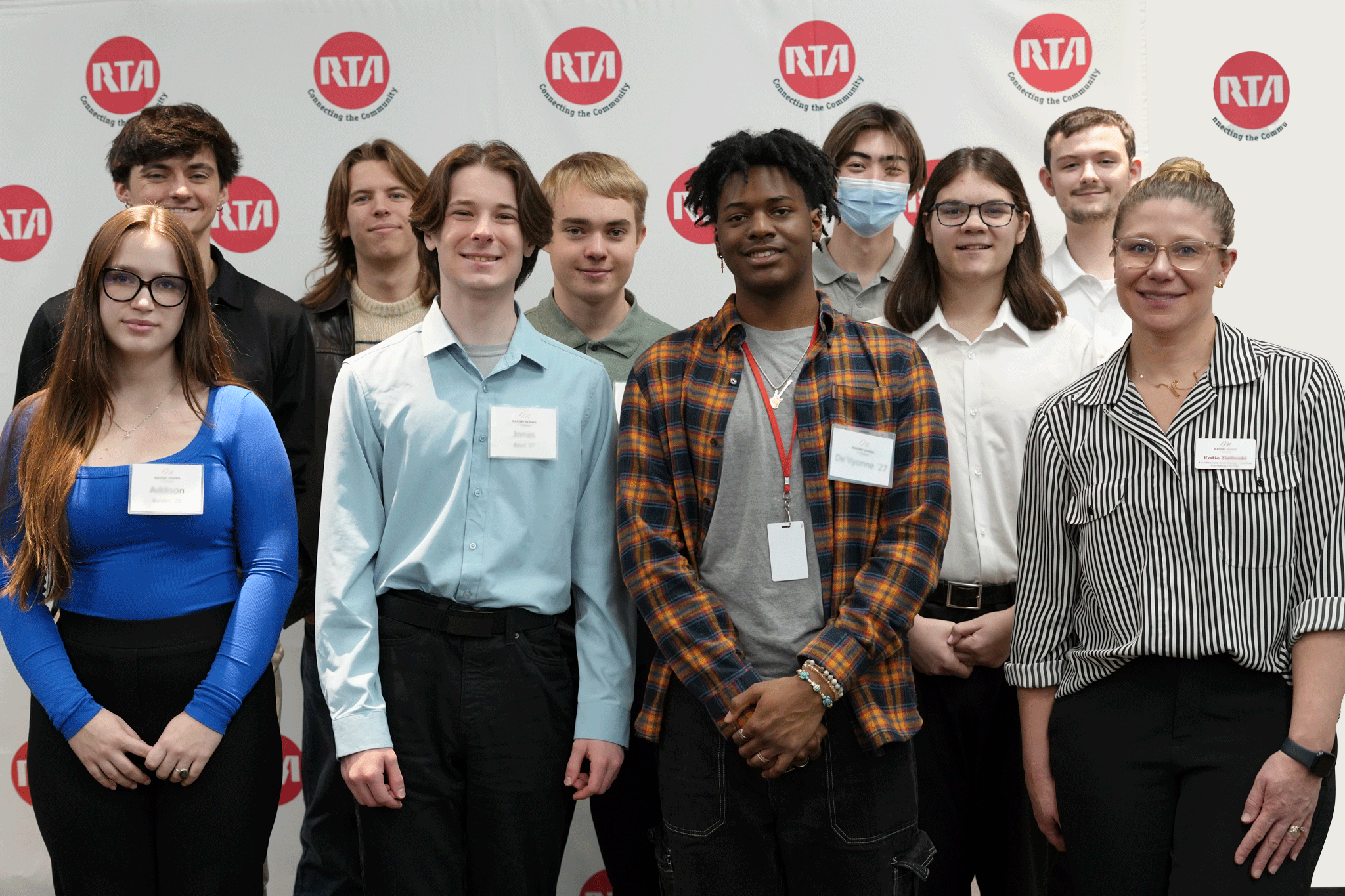 A large group photo of Mastery School of Hawken students and teacher Katie Zielinski posing in front of a GCRTA "Connecting the Community" backdrop.
 -
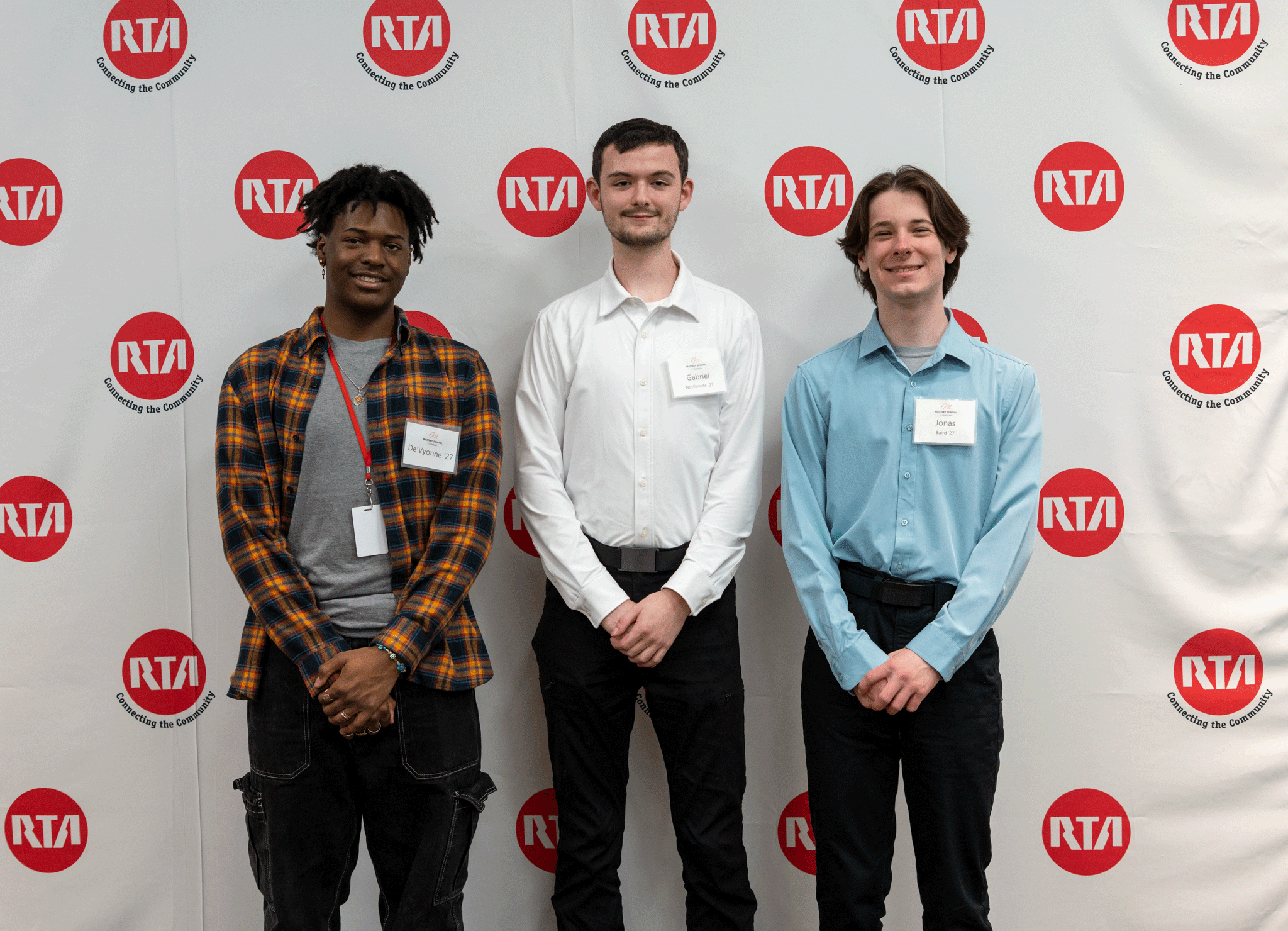 Three Hawken students wearing professional attire posing in front of an GCRTA logo backdrop.
 -
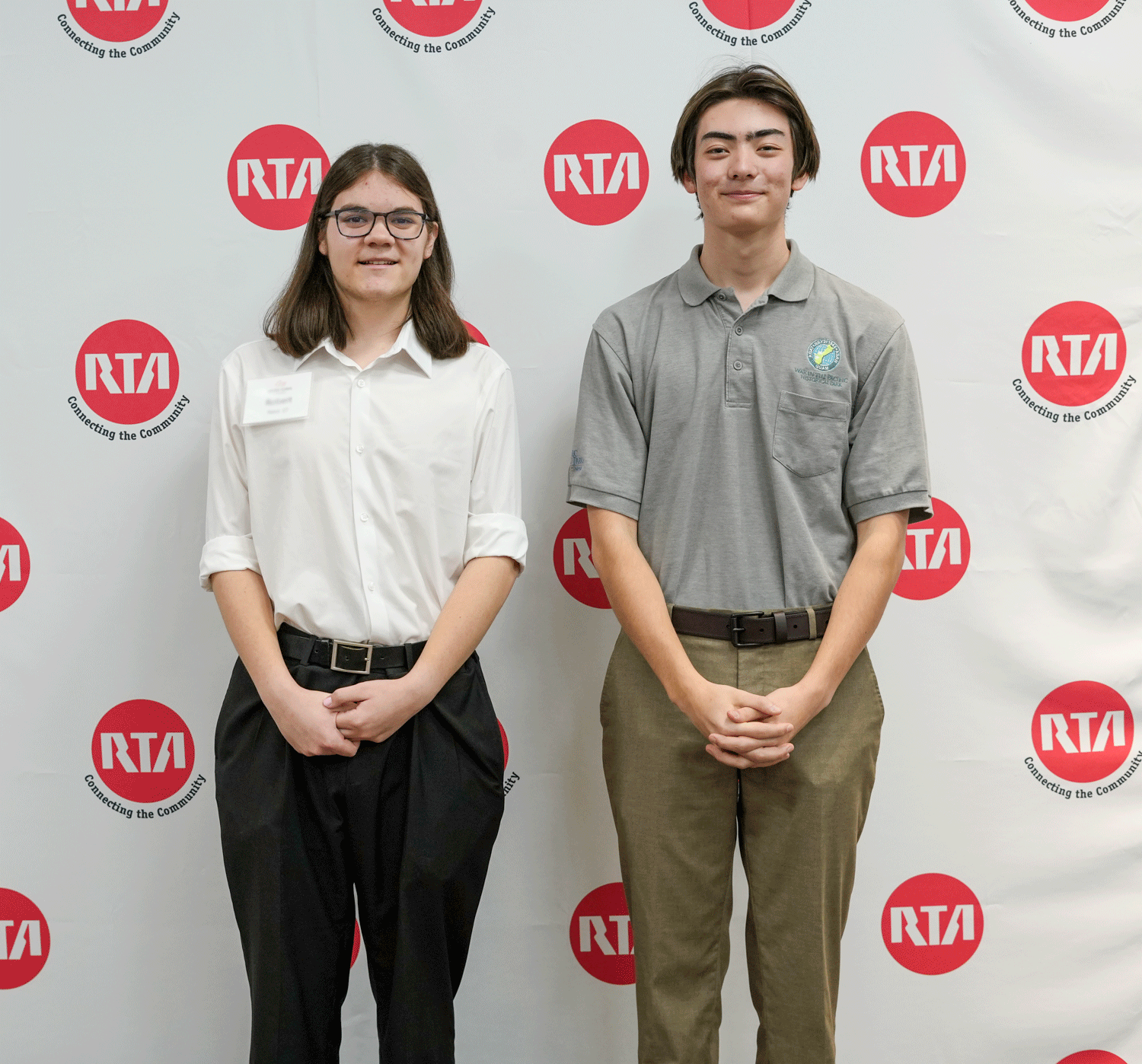 Two Hawken students standing side-by-side for a in front of a white GCRTA logo backdrop.
 -
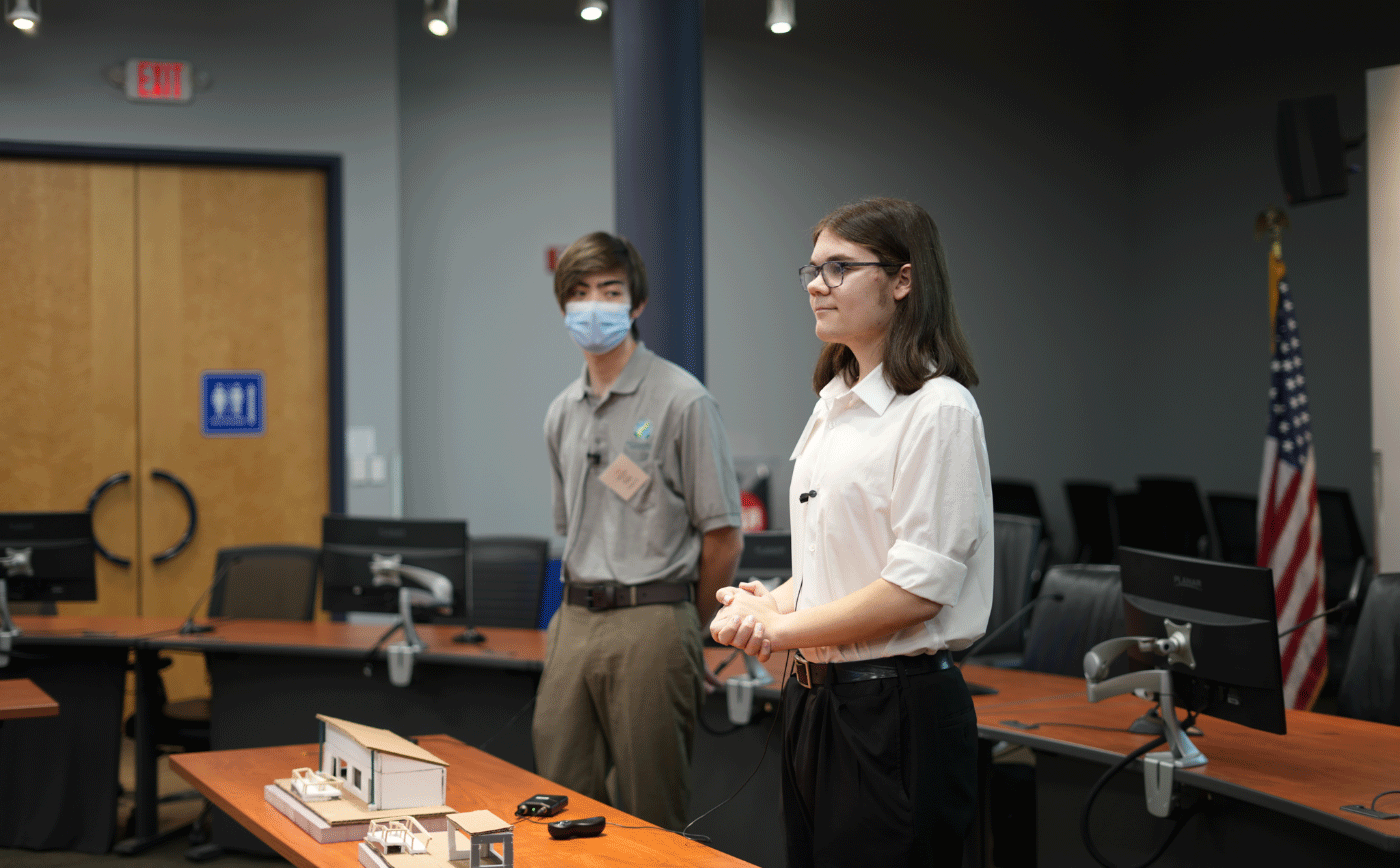
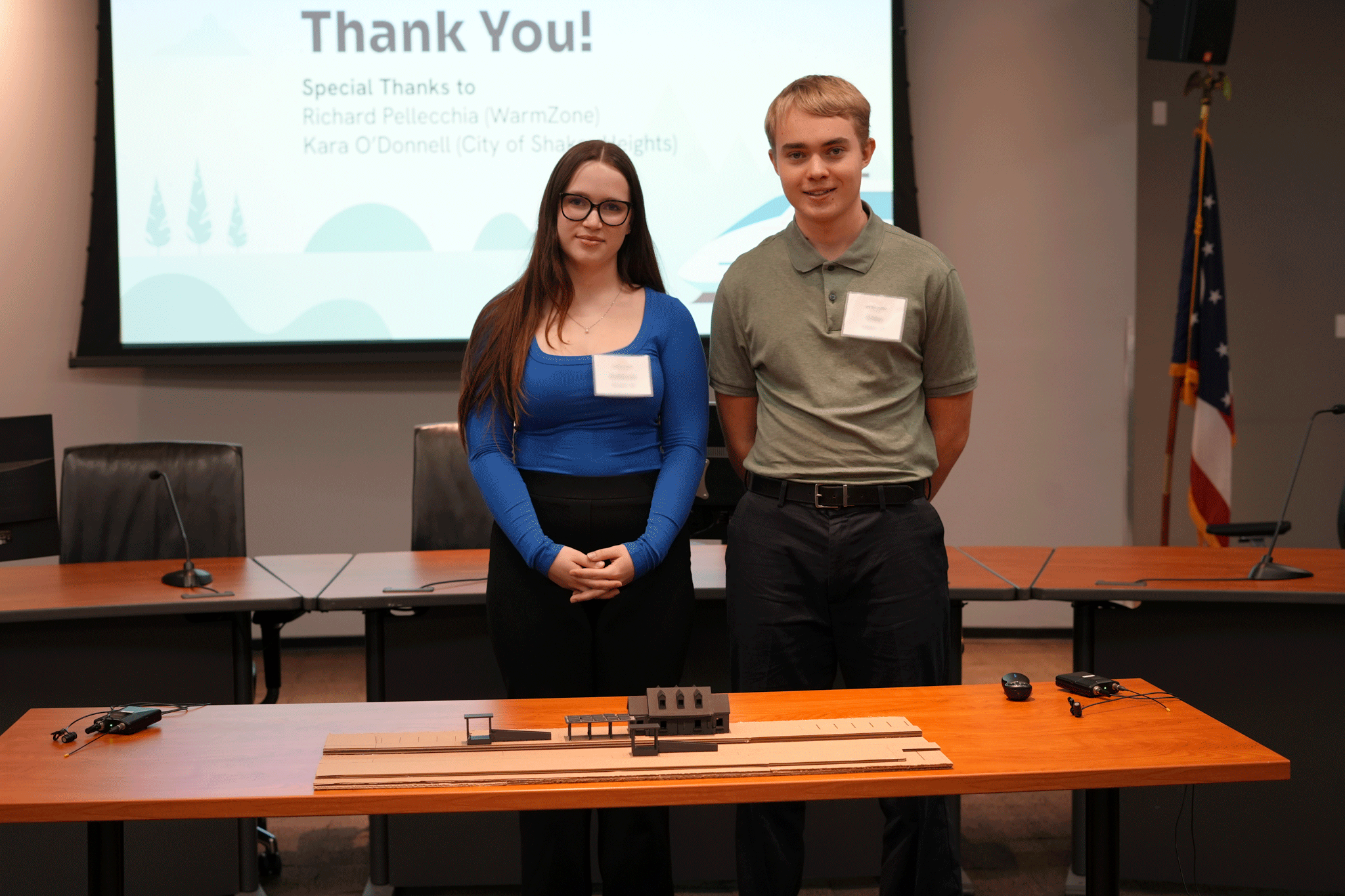 Two Hawken Students standing behind a detailed cardboard scale model of a transit station during their Blue Line project presentation.
 -
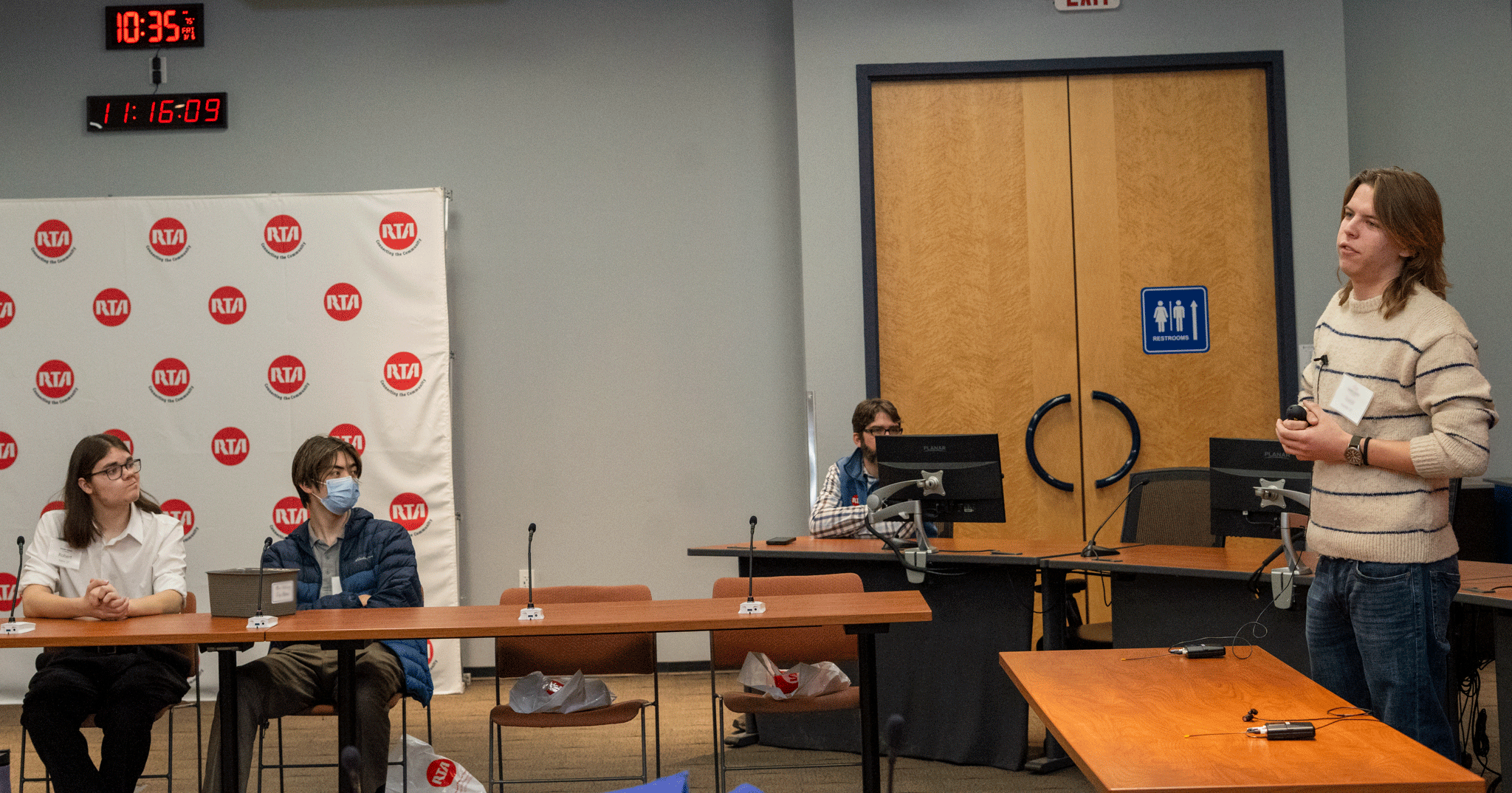 Hawken student speaking at a podium during a presentation at GCRTA headquarters, while two peers listen from the conference table.
 -
 Student presenting a Blue Line Station redesign to a panel, standing next to a table with architectural scale models and the American flag in the background.